
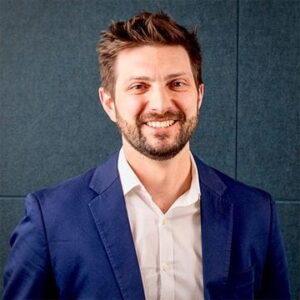
Father Gabriel Richard High School is proud to spotlight Dr. Peter Chockley ’06, whose groundbreaking work in immunology is advancing the future of cancer treatment. Now an Assistant Professor in the Department of Molecular Medicine and Therapeutics, Dr. Chockley leads a research lab focused on Natural Killer (NK) cell biology and its therapeutic potential. A graduate of the University of Michigan, where he earned both his bachelor’s degree in biochemistry and his Ph.D. in immunology, Dr. Chockley has published and patented research in leading scientific journals including Nature Biotechnology, Nature Genetics, and The Journal of Clinical Investigation. In this Q&A, he shares how curiosity first sparked in an FGR classroom led to a career at the cutting edge of cancer immunotherapy.
What is the focus of your research?
I essentially take naturally occurring anti-cancer immune cells (the natural killer cell) from the patient or healthy donor and give those cells a new way (Chimeric Antigen Receptor) to target and eliminate cancer cells. This cellular bioengineering approach blends aspects of existing biology and new creations to enhance our defense against numerous diseases and in my case cancer.
When did you start focusing on that area of research? Why does it interest you?
I became particularly obsessed with natural killer cells while studying the evolution of the immune system using zebrafish in Germany after my undergraduate degree. Natural Killer cells are capable of sensing and hunting cancer and virally infected cells through a diverse set of receptors. I continued the study of natural killer cells during my Ph.D. focusing on how these cells can specifically target metastatic cancer cells, specifically lung cancer cells. I then really got involved with bioengineering during my time at St. Jude Children’s Research Hospital to create new ways to target pediatric malignancies. The potential for natural killer cell therapy is only just starting to get tapped and new therapeutics are being created rapidly.
What’s the most exciting thing you’re working on right now?
I am working towards a universal donor selection algorithm to better choose which donor is the best donor for patients requiring stem cell transplants. This would also help inform which healthy donor to use for the aforementioned cell therapies. These two aspects should reduce overall cost and impact a larger population of patients.
You currently work at OSU but you earned your bachelor’s degree in biochemistry and your Ph.D. from the University of Michigan. Who are you going to be cheering for at The Game next month?
I’m being advised to plead the fifth here. I hope Michigan wins the blood battle though! (Go Donate!)
What’s one moment or lesson from your time at Father Gabriel Richard that still sticks with you today? Was there a teacher or mentor who helped shape your path?
This is a tough one as there were many and in different ways.
In no particular order:
- Dave Mangan (I still do puzzles to wake up the brain especially when doing stats)
- James Turner (Rigorous standards and fostering curiosity during AP Chem was rather formative going into the lab)
- Anne Kolaczkowski-Magee (K-M) (Taking drama and learning how to be comfortable in a performative role has enhanced my ability to convey my passion for science and the research I do).
If you could give current Father Gabriel Richard students today one piece of advice for preparing for college, careers, and life, what would it be?
Find joy in the tedium; it all adds up eventually.
What excites you most about the future of your field? And are there any goals or what are you working towards next?
The ever-expanding knowledge of our diseases and how to treat them with precise medicines is astounding.
One Goal. End Cancer.